
The world your child will live in is very different from the one we grew up in. Jobs that seemed safe for years can disappear in a flash. There are new jobs that didn't exist five years ago. Artificial intelligence does things that people have been doing for a long time. In light of this, just being good at school doesn't seem like enough preparation. Quite rightly, ensuring our children are well-equipped for an uncertain future is a priority for every parent. It isn't simply about predicting what specific skills might be in demand in a decade; it's more about fostering young people who have the resilience and self-assurance to navigate whatever life throws at them.
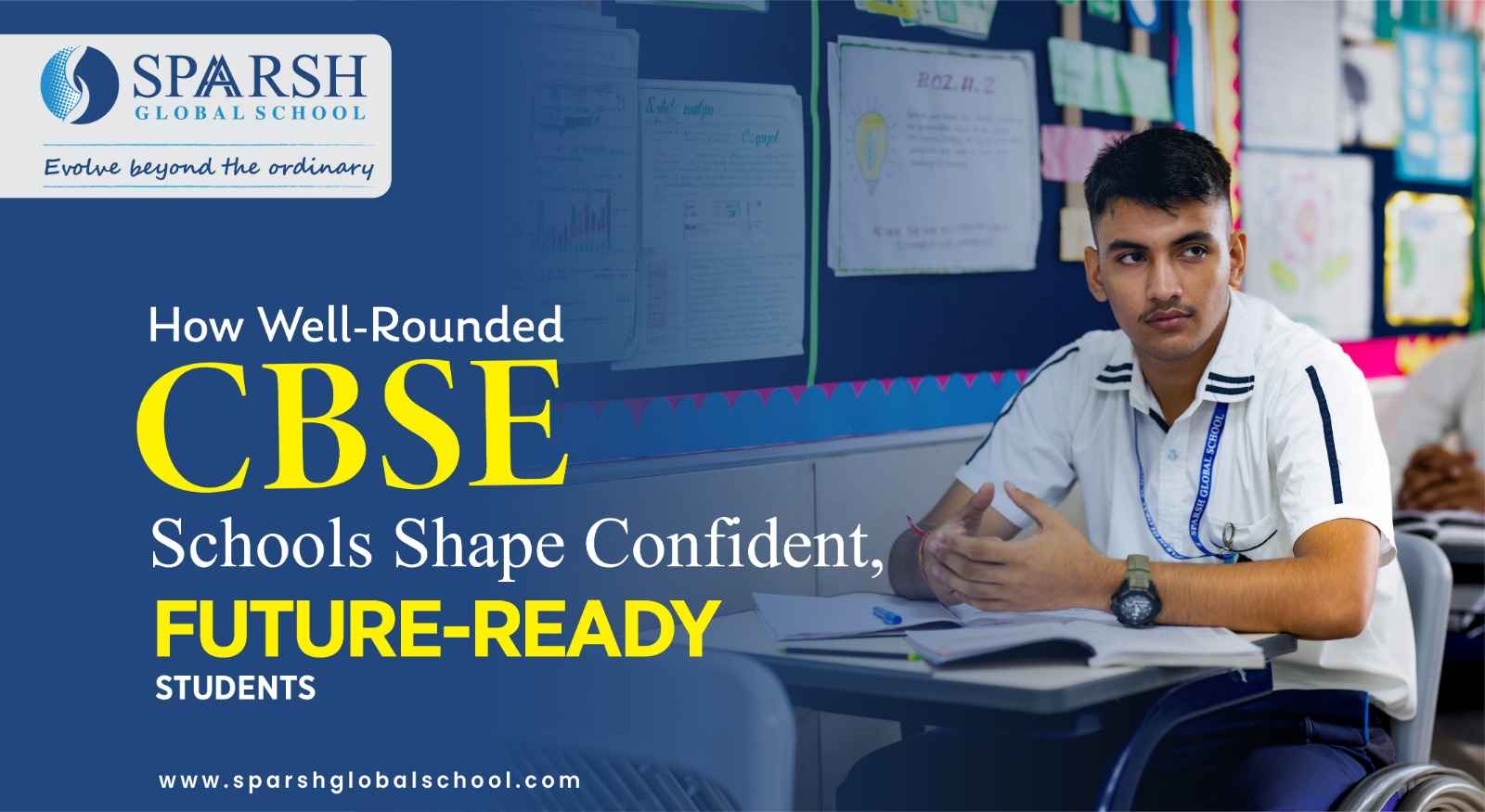
CBSE schools who offer a genuinely well-rounded programme manage this through a very deliberate balance. Among the leading CBSE schools in Greater Noida West, this balance is achieved by thoughtfully integrating academics, co-curricular activities, life skills, and values to nurture confident, capable, and future-ready learners.We all realise that exam results remain a crucial gateway for university and careers—there’s no ignoring that—but every one of our students deserve more than just a grade on a sheet. They also know that knowing things from books isn't enough to be successful in life. How far someone goes after school depends on their communication skills, emotional intelligence, creative thinking and the ability to bounce back. When these things are combined with good grades, amazing things can happen.
What Really Makes a School Well-Rounded
In school brochures, the phrase "holistic education" is used a lot. Many schools say they offer it, but in reality, check if they are just running test prep centres with sports days every now and then. For a real, well-rounded education, there needs to be a planned structure and consistent use of it. It means giving real time and resources to non-academic growth.
Sparsh Global School does this on purpose, not by chance. We made our schedule so that students can regularly participate in a variety of activities without falling behind in their studies. This isn't about giving students a little bit of exposure. It requires ongoing participation that leads to real skill growth.
Strict academic standards that don't stifle creativity
When used carefully, the CBSE curriculum is a great framework. Over the past ten years, the board has changed a lot. It now focuses more on learning through doing and less on memorising things. SGS teachers are very excited about this change. Instead of just taking notes, lessons include talking, trying and figuring things out.
Before students use formulae mechanically, Maths classes look into why they work. Science lessons aren't just on paper; they happen every week in the labs. Social Studies links events from the past to problems that students can relate to today. Discussions about English literature encourage both personal interpretation and analysis of the text.
Some of the most important parts of school are:
- Understanding concepts is more important than memorising them.
- Formative assessments on a regular basis instead of just high-stakes tests
- Project-based learning that links subjects to real-life situations
- Open-ended questions help people think critically.
- Giving students one-on-one help when they have trouble with certain ideas
There is academic pressure—board exams are a real-life high-stakes situation. But we know that students who are stressed and anxious do worse than those who are confident and well-supported. Balance works better than constant drilling.
You might not think that Arts, Music and creative expressions are important.
Many parents think that arts education is a nice extra but not necessary when their children need to focus on their schoolwork. This assumption is becoming less and less supported by research. Students who regularly participate in creative activities exhibit superior problem-solving skills, enhanced emotional regulation and increased resilience in stressful situations.
SGS has active programmes in dance, music, theatre and the visual arts. These aren't just things you do on Friday afternoons to make up for it. They are important parts of the curriculum that have their own teachers and facilities. Students find out they have skills they didn't know they had. More importantly, they learn that making mistakes while being creative helps them grow instead of failing.
A child who is afraid of Maths may gain confidence by painting or singing before that confidence carries over to schoolwork. The links aren't always clear, but they are always there.
Physical Education That Isn't Just About Cricket and Football
Sports teach character in ways that academics cannot. Losing a game teaches you how to be graceful when you lose. To be on a team, you have to put the needs of the group ahead of your own. Training when you're tired physically makes you mentally strong, which is useful in all areas of life.
We have a wide range of sports available because we know that not every child is interested in traditional team sports. There are many sports and activities that can be enjoyed by people of all ages and abilities, such as athletics, swimming, badminton, table tennis, chess, yoga. The goal isn't to make professional athletes. It's making sure that every student finds a type of physical activity that they enjoy and will keep doing for the rest of their lives.
House systems and competitions between schools keep the spirit of competition alive. Students learn that being ready is a better way to get results than just luck or natural talent.
Things That Textbooks Don't Teach You About Life
Universities and employers say that graduates often lack basic life skills, even though they have impressive academic records. They can solve hard Math problems, but they have trouble managing their time. They write great essays, but they can't work together in groups. They know a lot about theory but not enough about how to use it in real life.
SGS fills this gap by teaching structured life skills as part of everyday activities. Students do community service projects that help them understand other people and the world around them.
Our student council and the various club activities we run gives pupils a real chance to lead, helping them understand the weight of responsibility and what it means to make a tough decision. Regular presentations across different subjects builds self-assurance, ensuring they feel comfortable when speaking in front of an audience. When it comes to group projects, it’s about far more than just "getting along"; it’s the nitty-gritty of negotiation and knowing how to delegate when things get a bit tricky. Our workshops on financial literacy provides every student a proper grounding in budgeting and a mature outlook on how they manage money. Likewise, digital citizenship programmes are vital to ensure children remain safe online and, perhaps more importantly, learn how to critique what they see.These aren't subjects that require a formal test. They are, however, quite fundamental to functioning well once they leave our gates.
Our young people face real emotional challenges today, driven by academic pressure and the often-difficult social dynamics of adolescence. Schools which fail to prioritise mental health put their pupils at a disadvantage during these formative years. This is why we have coupled our counselling services with proactive wellness programmes; hoping these issues go away is never an option. Discussions about managing stress or building healthy relationships happen as a matter of course, so it doesn't feel like a forced intervention. Every one of our teachers are trained to spot the signs when a student might need that bit of extra guidance.The mood makes it easier to ask for help instead of suffering in silence while putting on a brave face.
Resilience grows when you face the right challenges and get the right help. Students need to fail in ways that are easy to handle and learn how to get back up. When you overprotect your children, you stop them from learning important things. On the other hand, putting them in situations they can't handle can hurt them. You need to pay attention all the time to get this balance right.
How Parents Can Help Their Kids Grow in All Areas
Schools can't do everything by themselves. The home environment has a big impact on how children grow up outside of school. Parents who value a wide range of accomplishments support what schools try to teach. When your child excitedly talks about a science experiment or a football game, showing that you care is more important than you might think.
Don't give in to the urge to judge everything by the percentage of students who pass. Instead of just asking what grades they're getting, ask what they're learning. Even if they don't seem to have anything to do with school success, encourage hobbies and interests. Don't plan every minute; instead, give yourself some time to relax. Believe that a well-rounded education will lead to better academic results than just focusing on studies.
Getting Ready for Life After School
Getting into college is getting more and more competitive. But now, top schools look at more than just grades when choosing students. They want students who are involved in campus life, have a wide range of interests and show promise as leaders. A well-rounded CBSE education gives students an edge in these selection processes.
More importantly, life after school requires skills and abilities that go beyond any one subject or skill. Being able to change is important when career paths change without warning. In almost every field, being able to communicate well is what makes you successful. Emotional intelligence has an impact on the quality of relationships in both personal and professional contexts. Creative thinking can help you solve problems that regular ways can't.
Sparsh Global School teaches students for the bigger picture, not just how to pass the next test. We don't just look at board results to see how well we're doing. We also look at the confident, capable and caring people who leave our gates ready to face whatever comes their way in the future.
Frequently Asked Questions
Q1. Won't focusing on non-academic activities negatively impact board examination results?
Evidence suggests exactly the opposite occurs. Students engaged in diverse activities typically perform better academically than those who focus exclusively on studies. Physical activity improves cognitive function and concentration. Creative pursuits enhance problem-solving abilities. Social involvement builds confidence that translates into examination performance. Our students achieve strong board results whilst simultaneously developing broader capabilities. The key lies in structured balance rather than chaotic overcommittment or narrow academic focus.
Q2. How do you ensure that holistic education doesn't become superficial tokenism where students dabble in everything but master nothing?
Genuine depth requires sustained engagement rather than brief sampling. We structure programmes so students commit to chosen activities for meaningful durations. A student might participate in Theatre, Swimming and Robotics Club, but they do so consistently rather than switching activities monthly. This allows actual skill development rather than superficial exposure. Academic subjects receive priority in timetable allocation, but co-curricular activities get protected time slots that aren't sacrificed when examinations approach. We've learned that treating these elements as integral rather than optional makes the difference between authentic holistic education and mere window dressing.