
Your child's school years set the stage for everything that comes after. The curriculum they study, the ways they learn and the global perspective they gain all affect not only their test scores but also how they think and act for the rest of their lives. Most parents choose CBSE because they know it. It's safe. Everyone else does it.
But here's something to think about: the world your kids will live in as adults is very different from the one where CBSE was made. Jobs move across borders all the time. There are universities all over the world. Employers value skills that CBSE doesn't always put at the top of the list, like critical thinking, research skills and conceptual depth over memorisation. Cambridge Assessment International Education is very different from other schools. The University of Cambridge in the UK is in charge of it. This system is used in more than 160 countries and more than 10,000 schools. That's not marketing; that's universities, employers, and education systems around the world seeing how rigorous and useful it is.
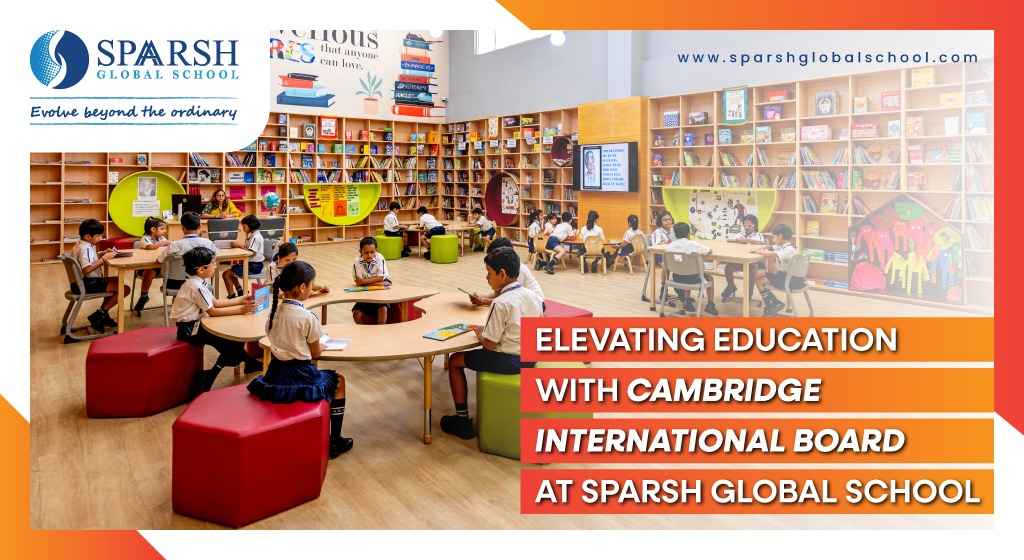
Sparsh Global School now offers both the Cambridge and CBSE curricula at the same time. We are not giving up on what makes CBSE strong. We're letting families really choose which path is best for their child's future. Greater Noida didn't have this kind of flexibility before. Parents had to choose between local CBSE schools and expensive international schools that didn't offer anything else. Now there's a middle ground: a world-class international curriculum that is easy to get and taught by teachers who know what Indian families want and need.
What Cambridge Really Means
Cambridge isn't just an "international board." Over the course of decades of educational research at one of the best universities in the world, this is a complete learning philosophy. The curriculum goes from Early Years to A Levels, which is for kids ages 3 to 19.
This is how it breaks down:
- Cambridge Primary: Ages 5 to 11, laying the groundwork for success
- Cambridge Lower Secondary: Ages 11 to 14, learning more deeply
- Cambridge IGCSE: a qualification for 14- to 16-year-olds that is recognised around the world and is the same as Class 10.
- A Levels from Cambridge: Ages 16 to 19: the best time to get ready for college
Each step builds on the one before it in a planned way. Students can join at any time and move on without any problems. The best thing about Cambridge is that it can be used anywhere in the world. Your child goes to SGS for primary school. The family moves to Singapore for work. The child keeps up with the same lessons without any problems.
Cambridge Assessment International Education is part of the University of Cambridge, which means it is consistent all over the world. Syllabi may vary slightly to accommodate local contexts; however, learning objectives and assessment standards remain consistent across all locations. This makes sure that real international standards are used instead of watered-down ones.
How It Is Different From What You Went Through
CBSE puts a lot of emphasis on learning new things and doing well in tests. Cambridge cares more about how students think than what they know. You can see the difference everywhere.
CBSE students are taught to memorise definitions, formulae and factual information. In contrast, Cambridge students focus on analysing questions, breaking down problems and developing their own solutions. Although both methods have their advantages, they foster different abilities. The Central Board of Secondary Education (CBSE) system is especially effective in establishing a robust knowledge base. Conversely, the Cambridge educational framework fosters autonomous learning by instructing students in information retrieval, critical inquiry and the synthesis of data from diverse origins.
The differences in philosophy are evident in how assessments are used. The Central Board of Secondary Education (CBSE) usually uses end-of-year exams that test students' memory and ability to use what they've learned. In contrast, Cambridge uses continuous assessment. This means that tests, assignments, projects and practical work all contribute to the final grade. As a result, students show their understanding through a variety of methods, rather than just one important exam.
Another important difference is the depth versus breadth of the subject. CBSE covers a lot of ground, but not in a lot of depth, in a lot of different subjects. Cambridge lets students study fewer subjects in more depth, based on their interests and strengths. Students focus on specific subjects instead of learning about everything by the time they take IGCSE and A Levels.
In line with India's NEP 2020
The National Education Policy 2020 focuses on learning by doing, critical thinking, being adaptable and developing the whole person. It's interesting that Cambridge already follows these rules. The curriculum was decades ahead of Indian education policy.
NEP 2020 wants less memorisation and more understanding of concepts. From the very beginning, Cambridge built this into its foundation. NEP encourages students to learn from different fields and mix and match subjects. Cambridge does exactly this, especially at the IGCSE and A Levels, where students can choose from more than 70 subjects.
If parents are worried that Cambridge is "too foreign" or doesn't fit with Indian educational goals, they should feel better knowing that NEP 2020's alignment should help. The government now supports methods that Cambridge has used for many years.
University Recognition: Both in India and around the world
Getting into college is probably the biggest worry for parents. Will Cambridge limit choices? In fact, it makes them much bigger.
For Indian universities, there are official rules that say how to change Cambridge qualifications into CBSE percentages. As long as students have studied the right subjects, they can still take the IIT-JEE, NEET, CLAT and other competitive exams. The conversion process is well-known and universities use it all the time.
Cambridge IGCSE and A Levels are recognised as the best in the world by universities all over the world. More than 2,000 universities in the UK, the US, Canada, Australia, Singapore and other countries will accept these qualifications directly. Many people actually prefer Cambridge qualifications to other international curricula because they are more rigorous and in-depth.
Top schools like Oxford, Cambridge, Imperial College, Stanford, MIT and Melbourne actively look for Cambridge A Level students. They know that these students are ready for independent study and research at the college level.
The SGS Model for Implementation
Cambridge wasn't simply added on as a marketing gimmick. Its integration is a core component of our programmes, especially for elementary and middle school students.
Primary students in grades 1 through 5 use Cambridge Primary for their core subjects, though they also incorporate elements of India's National Curriculum Framework. This approach combines a strong cultural foundation with international standards. Using Cambridge's inquiry-based method, children explore Indian culture, its context and its values, while also developing literacy, numeracy and environmental awareness.
"Global Perspectives" is a fresh initiative we've launched, aiming to transcend the usual limits of individual subjects. The programme encourages students to examine issues from various angles, understanding that straightforward answers are seldom found. This method fosters critical thinking, a vital skill in our increasingly polarised world.
Students in grades 6-8 take Cambridge Lower Secondary classes in Maths, Science, Languages and Electives like Digital Literacy, Physical Education and the Arts. The curriculum recognises that kids this age are all different and includes fun, challenging activities that don't make them feel overwhelmed.
During these years, experienced teachers help students meet higher academic standards while also giving them social and emotional support as they go through the changes that come with adolescence. Teachers in the classroom and specialised counsellors help kids deal with problems that come as they grow up and find their place in the world.
Subject Range and Adaptability
Compared to the CBSE's more rigid structure, Cambridge has a lot of different subjects to choose from. Students can choose from more than 70 subjects for the IGCSE, including 30 languages. This makes it possible to really personalise things based on skills, interests and plans for the future.
Students of science can study three different fields (Physics, Chemistry, and Biology) in depth that is not possible when they are all combined. Language students can choose from traditional options as well as French, Spanish and Mandarin. Creative students take Art & Design, Drama and Music as their main subjects instead of just as extras.
A Levels (like Class 11-12) let you specialise even more. Most of the time, students study three or four subjects in depth instead of the six to seven that CBSE requires. This level of depth gets them ready for college, where they'll focus even more. It also makes it less stressful to have to study for too many subjects at once during important years of preparation for college.
Things Parents Should Think About
Not every child will do better in Cambridge than in CBSE. It's not the same and some students do better than others.
Children who ask "why" all the time instead of just accepting things as they are often do well in Cambridge's inquiry-based setting. Cambridge is usually interesting for students who like to do research, write long answers and learn a lot about a subject instead of just memorising facts.
On the other hand, students who like clear syllabi, structured guidance and straightforward fact-based tests might have trouble with Cambridge's open-ended approach at first. This doesn't mean they can't do well; it just means that the change will take some time and help.
Plans for the family are also important. CBSE's direct alignment is helpful if you know for sure that your child will only go to Indian universities and take Indian competitive exams. Cambridge is better for preparing you for college if you want to keep your options open internationally or think you might go to college abroad.
Instead of pushing one curriculum over another, we help families make these choices on their own at SGS. We don't want to push any one board over another; instead, we want to find the best way for each child to learn.
Making the Change
Students who switch from CBSE to Cambridge in the middle of the year are worried about how hard it will be to adjust. We have carefully planned for this. The support for students who are transitioning starts before they even start their Cambridge programmes and goes on for their first year.
Teachers who are trained in both systems know exactly where gaps might happen and take steps to fix them before they happen. Students get extra help with things like writing, research skills and independent study techniques that are harder for Cambridge students than for CBSE students.
Most students get used to it in one term. Some take a little longer. One thing we always see is that students don't want to switch back once they've made the change. The different ways of teaching, the variety of tests and the depth of the subjects tend to keep them more interested than they were before.
Sparsh Global School is still dedicated to improving the quality of education while also respecting the different needs and goals of families. Offering both Cambridge and CBSE at the same time is a clear sign of this committment. The curriculum that was available in your area shouldn't limit your child's future. Not anymore.
Conclusion
At the end of the day, we want our students to have every opportunity available to them. Offering both CBSE and Cambridge ensures that your child’s future isn't limited by what happens to be available locally. Whether they choose a traditional path or a more global one, we are here to support that journey. We invite you to visit Sparsh Global School to see how these programmes work in practice and to discuss which path might be best for your child.
Frequently Asked Questions
Q1. If my child studies Cambridge at SGS, can they still appear for JEE or NEET, and will Indian universities accept their qualifications?
Yes absolutely. Cambridge students remain eligible for all Indian competitive examinations including JEE and NEET provided they've studied required subjects at appropriate levels. For example, JEE requires Physics, Chemistry and Mathematics which Cambridge offers. NEET needs Physics, Chemistry and Biology—again available through Cambridge. The key is ensuring subject selection aligns with examination requirements. SGS guidance counsellors help families plan this carefully from IGCSE onwards. Regarding university admissions, Cambridge qualifications convert to CBSE percentages through established conversion guidelines that Indian universities recognise and accept. The process is standardised and thousands of Cambridge students enter Indian universities annually without difficulty. We help families navigate conversion requirements and provide documentation universities need.
Q2. How does teaching at SGS differ when delivering Cambridge versus CBSE curriculum, and will this confuse my child if they have siblings following different boards?
Teaching approaches differ philosophically between boards. CBSE lessons tend toward teacher-led instruction with defined syllabi and predictable examination patterns. Cambridge emphasises student-led inquiry, research skills and open-ended investigation. At SGS, our faculty are trained in both pedagogies and understand how to support students across different curricula without creating confusion. For families with siblings following different boards, we've observed minimal confusion actually occurs. Children compartmentalise school learning quite effectively. The bigger benefit is exposure to varied approaches enriches both children—the CBSE student learns critical thinking from their Cambridge sibling's projects whilst the Cambridge student benefits from their CBSE sibling's strong foundational knowledge. Families often report that dinner table conversations become richer as children share different perspectives on similar topics approached through different educational lenses.