


In the ever-dynamic realm of learning, research has shown that the way students learn is just as important as what they learn. The importance of appreciating individualised learning preferences is a process of promoting high performance in educational institutions. Visual learners, auditory learners, kinesthetic learners and reading/writing learners all receive and record information differently. Identification of styles at early ages also allows schools to adjust instruction to suit the understanding and interests of students.
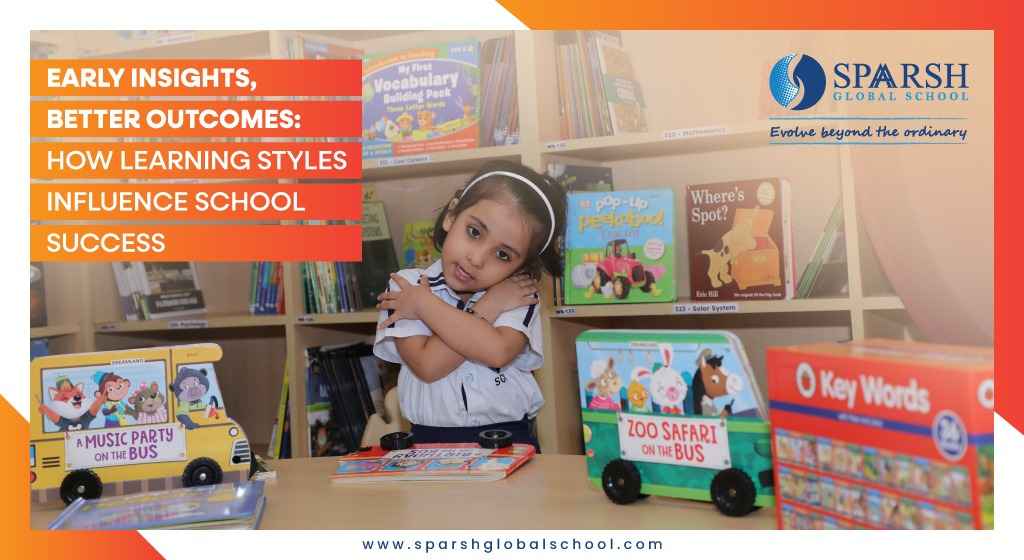
Concept of Learning Styles
Learning styles refer to the way people like to receive, process and store information. Although there are different types of models, one of the most familiar is the VARK model, which categorises learners into four types: Visual, Auditory, Reading/Writing and Kinesthetic. Visual learners are those who understand concepts well through images, diagrams and spatial awareness. Auditory learners comprehend better through spoken words and conversations. Learners who love to read and write are more comfortable with text, whereas learners who are kinesthetic learners respond better to practical activities and work that involve movement.
A clear understanding of these learning styles empowers teachers to design student-centric lessons, that in turn promotes positive experience of learning and better results.
Why Early Identification Matters
Early recognition of learning styles in a developing child can have a significant impact on the child's overall performance and emotional well-being. Learners in the younger generation, at times, have problems not because they cannot learn, but due to the inability of mainstream teaching methods to meet their learning styles. Early observation enables teachers to accommodate the different approaches and offer the appropriate support.
In addition to this, children acquire independence, confidence and motivation once they realise how they can learn better. This self-awareness encourages them to learn throughout their lives and be prepared to tackle future academic and personal setbacks in a resilient manner.
Tailored Teaching for Greater Engagement
One of the significant advantages of identifying learning styles is that it becomes possible to differentiate classroom activities in a way that meets the needs of different learners. An example of this is a visual learner who may find coloured mind maps or infographics useful in science classes. In contrast, an auditory learner may absorb more information through group discussions or narrative forms of learning. Kinesthetic learners respond to hands-on experiments, role plays or interactive games; reading/writing learners might excel in essays and well-organised notes.
Classroom interaction can be improved tremendously with such individualised strategies. Students get a sense of being noticed, understood and supported by the teacher, which further increases their interest and involvement. When learning is tailored to suit students’ learning method, they learn more deeply and have a better retention.
The Role of Educators and Parents
Instructors help by identifying and dealing with different learning styles. Informal evaluations, close attention and reflective teaching skills enable an educator to gather information about the preferences of each learner. The use of varied teaching strategies in a single lesson also guarantees that it accommodates all learners without isolating anyone.
Parents play a vital role in this process. They can give significant feedback to in-class learning by monitoring how their children react to various learning environments at home and support complementary methods. Such collaboration between educators and parents provides a more comprehensive growth for the child.
Technology as a Learning Ally
Present-day educational technology provides valuable tools for accommodating diverse learning styles. Interactive programmes, multimedia materials and adaptive learning systems enable customisation that would be otherwise impossible to consider using conventional means alone. With educational videos, podcasts, digital simulations and gamified learning, technology facilitates a better accommodation of individual needs in a group environment.
The use of these tools in schools not only unlocks learning experiences, but also equips students with digital literacy, a valuable skill in the 21st century.
Building Confidence and Academic Success
Ultimately, acknowledging and cultivating individual learning styles contribute to enhanced academic performance. Learners have a higher chance of performing well when the learning process appears natural and enjoyable. It also instils confidence in them to take the initiative and investigate their strengths. In the long term, how a positive school environment shapes the future: understanding its impact on child development becomes evident through enhanced test results, positive classroom behaviour, and a genuine love of learning.
Conclusion
Effective use of counselling theories enables teachers to understand their students better. Schools in Greater Noida West can help students reach their full potential by monitoring their learning styles early on and tailoring training methods to suit those styles best. Such an individualised strategy not only improves academic performance, but also facilitates emotional and social growth.
Sparsh Global School places a strong emphasis on identifying the individual learning profiles of all students. The school guarantees that all learners are allowed to flourish not only within the four walls of the classroom, but also outside, through innovative approaches to learning, highly trained teachers and a supportive environment.
FAQ
1. How do learning styles affect a student’s academic performance?
Learning styles influence how effectively a student understands, processes and retains information. When teaching methods align with a student’s preferred learning style—whether visual, auditory, kinesthetic or reading/writing—they are more likely to remain engaged, comprehend content deeply and perform better in assessments. Recognising these styles early helps educators adapt their strategies to maximise student potential.